
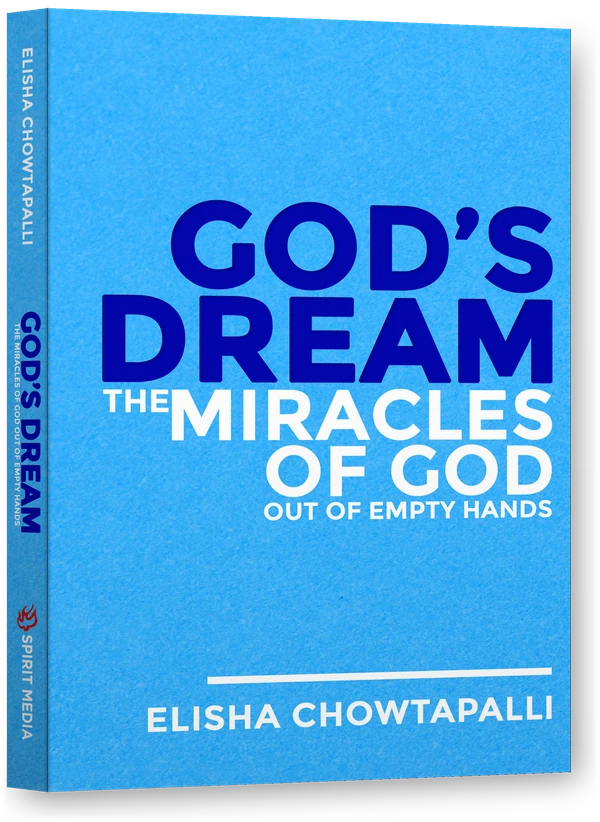
By Elisha Chowtapalli
God's Dream
The Miracles of God Out of Empty Hands
For readers who want to see God at work in a life that began with nothing, and for supporters of missions and children's ministry in India.
Born into a poor Dalit family in a village in Andhra Pradesh, South India, Elisha Chowtapalli tells what God did with empty hands: a children's home, schools, a feeding program and a hospital for mothers.
15% off first order + free standard shipping to 223 countries
Afghanistan, Åland Islands, Albania, Algeria, Andorra, Angola, Anguilla, Antigua And Barbuda, Argentina, Armenia, Aruba, Australia, Austria, Azerbaijan, Bahamas, Bahrain, Bangladesh, Barbados, Belgium, Belize, Benin, Bermuda, Bhutan, Bolivia, Bosnia And Herzegowina, Botswana, Brazil, Brunei Darussalam, Bulgaria, Burkina Faso, Burundi, Cambodia, Cameroon, Canada, Cape Verde, Caribbean Netherlands, Cayman Islands, Central African Republic, Chad, Chile, China, Colombia, Comoros, Cook Islands, Costa Rica, Cote D'ivoire, Croatia (Local Name: Hrvatska), Curaçao, Cyprus, Czech Republic, Denmark, Djibouti, Dominica, Dominican Republic, Ecuador, Egypt, El Salvador, Equatorial Guinea, Eritrea, Estonia, Ethiopia, Falkland Islands (Malvinas), Faroe Islands, Fiji, Finland, France, French Guiana, French Polynesia, Gabon, Gambia, Georgia, Germany, Ghana, Gibraltar, Greece, Greenland, Grenada, Guadeloupe, Guam, Guatemala, Guernsey, Guinea, Guinea-Bissau, Guyana, Haiti, Holy See (Vatican City State), Honduras, Hong Kong, Hungary, Iceland, India, Indonesia, Iraq, Ireland, Isle of Man, Israel, Italy, Jamaica, Japan, Jersey, Jordan, Kazakhstan, Kenya, Kiribati, Kuwait, Kyrgyzstan, Lao People's Democratic Republic, Latvia, Lebanon, Lesotho, Liberia, Libyan Arab Jamahiriya, Liechtenstein, Lithuania, Luxembourg, Macao, Macedonia, The Former Yugoslav Republic Of, Madagascar, Malawi, Malaysia, Maldives, Mali, Malta, Martinique, Mauritania, Mauritius, Mayotte, Mexico, Moldova, Republic Of, Monaco, Mongolia, Montenegro, Montserrat, Morocco, Mozambique, Myanmar, Namibia, Nauru, Nepal, Netherlands, New Caledonia, New Zealand, Nicaragua, Niger, Nigeria, Niue, Norway, Oman, Pakistan, Palestinian Territory, Occupied, Panama, Papua New Guinea, Paraguay, Peru, Philippines, Pitcairn, Poland, Portugal, Puerto Rico, Qatar, Republic of Korea, Reunion, Romania, Rwanda, Saint Barthélemy, Saint Kitts And Nevis, Saint Lucia, Saint Martin, Saint Vincent And The Grenadines, Samoa, San Marino, Sao Tome And Principe, Saudi Arabia, Senegal, Serbia, Seychelles, Sierra Leone, Singapore, Sint Maarten, Slovakia (Slovak Republic), Slovenia, Solomon Islands, Somalia, South Africa, Spain, Sri Lanka, St. Helena, St. Pierre And Miquelon, Sudan, Suriname, Svalbard And Jan Mayen Islands, Swaziland, Sweden, Switzerland, Taiwan, Tajikistan, Tanzania, United Republic Of, Thailand, Timor-Leste, Togo, Tokelau, Tonga, Trinidad And Tobago, Tunisia, Turkey, Turkmenistan, Turks And Caicos Islands, Tuvalu, Uganda, Ukraine, United Arab Emirates, United Kingdom, United States, Uruguay, Uzbekistan, Vanuatu, Viet Nam, Virgin Islands (British), Wallis And Futuna Islands, Western Sahara, Yemen, Zambia, Zimbabwe
Born with nothing in an Indian village, he followed God's dream for orphaned children.
Though I am part of this story, it's not really about me. Mainly, it is about the One who created me, who called me, who guided me, who gave me the vision, who entrusted me with work, and who is using me for His glory in India.
For readers who want to see God at work in a life that began with nothing, supporters of missions and children's ministry in India who want the story behind LIGHT, and anyone who wants to understand what education changes for Dalit children. Elisha Chowtapalli tells it in his own words, across thirteen chapters, from a one-room mud home to a children's home, schools, a feeding program and a hospital for mothers. A note on subjects: this is a memoir of poverty and of caste discrimination in India, written by someone who lived it. It speaks of hunger, deaths in families, children who beg or work instead of going to school, and, briefly, of violence and abuse that children face. It is one man's account and testimony, not a history of the caste system, and it is told without graphic detail.
What makes this book for people who want to see God work through an empty-handed life
A memoir in thirteen chapters and a conclusion, by the founder and president of LIGHT Society. He was born into a Dalit Christian family in a remote village in Andhra Pradesh, South India, and he insists the book is about God, not himself.
Five things set it apart:
- It starts with real poverty and does not soften it. His father was a quarry laborer paid about one U.S. dollar a day, the family lived in one room with a palm-leaf roof, and there was no electricity in the home until he was nineteen.
- It explains what it means to be a Dalit from the inside. A full chapter, Untouchables of India, includes a section on the caste system, and the author says his friends urged him to write about his people so the rest of the world could understand.
- It follows one calling to concrete results. From a prayer and a first child in 2006, the work grew into LIGHT Home, an English medium school, a tailoring training program, a feeding program for the elderly, a Bible school, church building and rural healthcare.
- It is honest about betrayal and forgiveness. One short section tells of a painful email that questioned his integrity while he was traveling, and of how God helped him forgive.
- It ends with the children. The conclusion speaks of children's dreams, of what education can change, and of a sponsorship plan for readers who want to help.
About the author
Written by
Elisha Chowtapalli
Published by
 Spirit Media Publishing
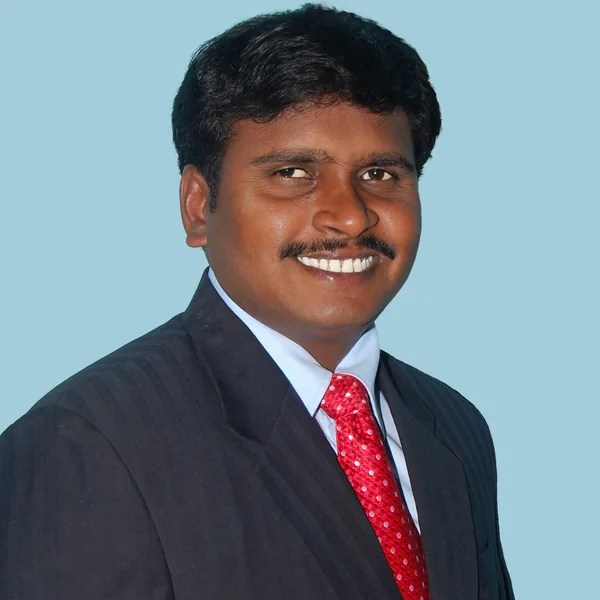
Elisha Chowtapalli
Elisha Chowtapalli was born into an impoverished Dalit Christian family in a remote village in Andhra Pradesh, South India, and was the first in his family to go to school. He followed God's call to serve the orphaned, poor and needy children of India. He is the founder and president of LIGHT Society, pastors a church and is building a hospital where at-risk mothers can safely deliver their babies.
Spirit Media Publishing
Spirit Media Publishing is a Christian publishing and marketing company with a vision to reveal our Father's heart to all nations. It offers full-service book creation and publishing in paperback, hardback, digital and audiobook formats, along with children's titles, compact Express Books, website design and SEO, and podcast and video production. We are honored to publish Elisha Chowtapalli's story of God's dream for the children of India.
What's inside
- Thirteen chapters and a conclusion, told by the founder of LIGHT Society in his own voice
- A chapter on who the Dalits are and on the caste system, from the author's point of view
- Student labor, a conversion, Bible college and answered prayer
- The founding of LIGHT Home on August 1, 2006, and what grew around it: an English medium school, tailoring training, feeding the hungry, a Bible school and church building
- Chapters on rural healthcare, child begging, child labor and access to education, with a sponsorship plan and testimonies from friends of the ministry
- A 228-page paperback, 5 x 7 inches, with a hardback and an eBook edition
Product details
- Title
- God's Dream
- Paperback ISBN
- 978-1-7377758-8-1
- Hardback ISBN
- 978-1-958304-89-1
- eBook ISBN
- 978-1-958304-88-4
- Subtitle
- The Miracles of God Out of Empty Hands
- Author
- Elisha Chowtapalli
- Publisher
- Spirit Media Publishing
- Language
- English
- Pages
- 228 (paperback)
- Trim size
- 5 x 7 inches
- Binding
- Paperback (perfect bound, matte laminate), black and white interior on cream paper
For readers who want to see God at work in a life that began with nothing
The author says plainly that he had nothing special to offer: "I truly felt there was nothing special about it." His story is told so that you can see what God did with empty hands. One of its last lines puts it this way: "Empty hands don't matter so long as you have God's dream in your heart."
For supporters of missions and children's ministry in India
If you give, pray for or visit ministries in India, this book is the story behind one of them. It shows how LIGHT Home began with one boy, how provision arrived week by week, and how the home grew into schools, feeding programs and a hospital project. Its last chapters invite readers to take part.
For readers who want to understand what education changes
The conclusion argues that education is "one of the most powerful tools for driving positive change in society" and says that "only a few Dalit children are given the opportunity to be educated." The author writes from experience: he was the first in his family to go to school.
For anyone who feels unqualified
The author opens by admitting he failed English in school, and he wrote this book in English anyway. He studied under a street light, worked part time as a photographer to pay for college, and could not afford to study further. When he started LIGHT Home he had one boy, no regular support and, as the subtitle says, empty hands. If you think your story is too small for God to use, start with Chapter 1: "I truly felt there was nothing special about it."
Three moments from the book
Studying under a street light
In the section Our Humble Home, the author describes the one-room house his family lived in. "The roof was made of palm leaves and the walls made of mud, with no proper floor." When the rains came, the family moved everything to the one corner that still had a roof. There was no electricity. "I use to study under a street light pole at night where I could get some light to study." He remembers the group study with other children as fun at the time, and anger at his poverty came later. "We got electricity when I was nineteen years old."
One boy, three children, no stove
LIGHT Home began on August 1, 2006, with one boy, and in a week there were three children and no regular support. He kept praying, and in the days that followed gifts arrived from friends in Australia. The early months were hard. "My mother used to cook food with firewood. It used to produce a lot of smoke but she never complained and didn't give up." For a time there was no running water. "My father took the responsibility of bringing water to us from the village tap and well." He carried it on his head, and the author writes that he did it "with great joy as it was part of God's dream."
A woman who had not eaten
On January 1, 2008, the author was praying for the new year when a passage from Matthew 25 came to his mind. Then a woman who "hadn't eaten for the last few days" came to his office and begged for food, and she came again each day. He realized that this was how God was sharing His dream: to look after widows and old people who were dying for lack of food. Land was bought, a building went up, and in February 2009 the feeding of fifty widows and old people began. "Though we had a place to give food we didn't have the finances to feed them on a regular basis." He started anyway, "just looking to Jesus for guidance."
Why this book exists
The author's reason is stated at the start. "It is my sincere prayer and hope that God will speak to you through this book to be able to see the need and to take action together to show His love to the orphan, poor, and needy children of India."
He ends with the same invitation. "I do not know what God's dream is for your life, but I do know that He will speak to you and guide you in the right path." Sharing God's plan with LIGHT Society, he says, is already a blessing, and he asks readers to open their hearts to God: "May God speak to you!"
Questions
What is God's Dream about?
Elisha Chowtapalli's own account of a life that began in a poor Dalit village in South India and how, he says, God used it to build a children's home, schools, churches and a hospital.
Does the book explain the caste system in India?
It gives the author's view of it in a chapter on who the Dalits are, and says Dalits "are still in a hopeless situation with no hope for the future." It is a memoir, not a history of caste, and it tells one man's life among the people India once called untouchable.
Where is it set? Is it about South India and Andhra Pradesh?
Yes. The author was "born and brought up in an impoverished, Dalit Christian family in a remote village" in the state of Andhra Pradesh, South India, and has spent his life there.
What is LIGHT?
LIGHT Home cares for orphaned and needy children, alongside an English medium school, tailoring training, feeding the hungry, Light Bible School, church building and rural healthcare growing toward a hospital for at-risk mothers.
Does it tell the story of feeding the hungry and of food for the poor?
Yes. The section Feeding the Hungry tells how one passage in Matthew 25 and a hungry woman at his office became a feeding program for fifty widows and old people.
Is it about the power of prayer?
Prayer runs through it. When he wanted land for a garden beside the home and had no money, he writes, "My hands were empty, but I did know one thing – the power of prayer!" Gifts and land arrive again and again after he prays.
What does it say about poverty in India?
It speaks from the inside: a quarry wage of about a dollar a day, a family without electricity, children who beg or work instead of going to school. It is the author's testimony, not a statistical study.
Can readers help?
Yes. The book closes with a sponsorship plan and says "just the act of sharing God's plan with LIGHT Society will already be a huge blessing."